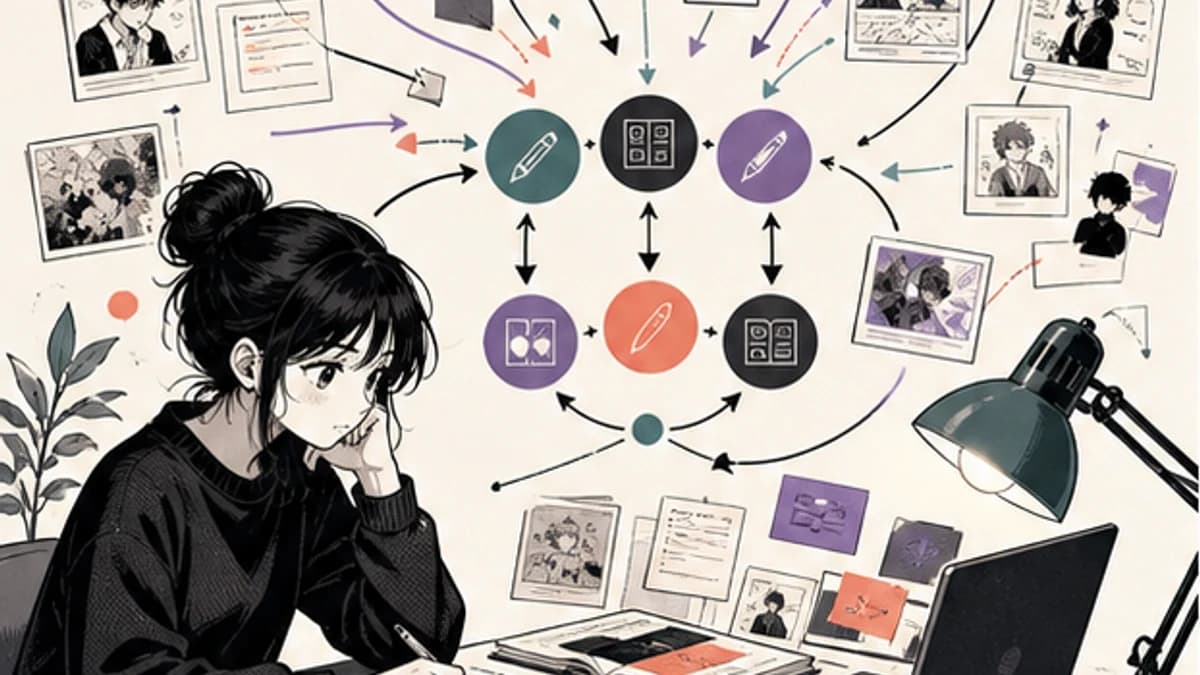
Manga communities contain plenty of color, but activity is not the same as demand for a coloring tool. A feed can be busy because artists are sharing portfolios, readers are discussing chapters, or the same account is reposting work. Counting every colorful post as a buyer signal would produce a comforting and useless answer.
This manga creator community research separates visible activity from evidence that someone is trying to finish, commission, or hand off real production work.
On July 31, 2026, VividManga screened more than 2,400 recent list items and community posts across creator forums, freelance markets, portfolio sites, reader communities, and Facebook groups. The research was read-only. No one posted, commented, liked, sent cold messages, or joined private groups to collect it.
The result was narrower than “creators want AI coloring” and more useful: recurring production problems exist around flats, continuity, handoff, deadlines, and paid collaboration. They appear most clearly where creators describe an actual job or a failed workflow.
What the sample did and did not measure
The combined screening covered 1,851 recent list items across 11 non-Facebook platforms and 591 recent top-level posts from 10 relevant Facebook groups. The Facebook count excluded seven older recommendation posts that the feed inserted among recent results.
Not every list item was a full thread. The audit separated three evidence levels:
- list exposure: a title, card, date, price snippet, or reply count used for screening;
- opened body: the full job, gig, project, or discussion text;
- deep reply reading: comments, buyer reviews, follow-up pages, or later discussion used to test the first impression.
Only opened bodies supported an individual demand example. Broader platform conclusions required repeated examples or deeper reading. Login walls, load failures, and inaccessible private discussions were recorded as gaps rather than treated as negative evidence.
The time window was mainly the previous three months. Low-frequency communities were extended to six months. Older discussions were used only as context. These details matter because “we saw 2,400 posts” does not mean “2,400 creators asked for manga coloring.”
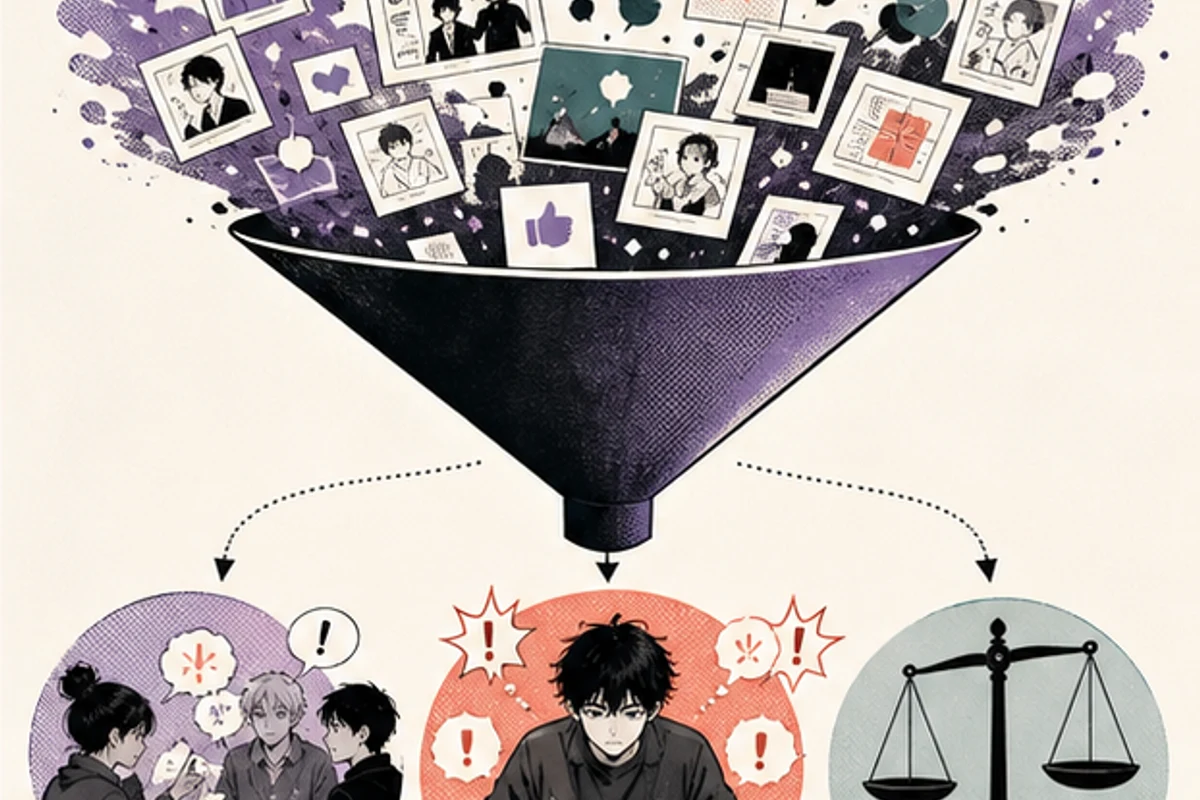
The strongest needs were operational
The most credible signals came from people trying to finish or commission work, not from general excitement about an image.
Flats and separable production stages
Paid posts divided work into flats, shadows, lighting, effects, backgrounds, and finishing. One Tapas recruitment thread sought help specifically with shading and lighting while the creator retained line art, backgrounds, and flats. Korean POSTYPE and webtoon recruitment examples also separated base colors, shadows, and post-production among assistants.
That division suggests a practical product boundary. A creator may want help with one repeatable stage without handing over the entire visual direction. It also explains why “one-click finished art” is often the wrong promise. Production teams need editable responsibilities and clear review points.
Character continuity and handoff
Creators discussed losing their coloring touch after a hiatus, changing artists, and handing work to collaborators. The useful response was not a grand style-transfer claim. It was a compact handoff: character colors, an approved lighting example, a clean line-art sample, a few protected decisions, and one finished page as the target.
Continuity becomes expensive when the reference lives only in someone's memory. Named palettes, accepted pages, and a correction log turn it into work another person can check.
Deadlines and buffers
Several communities described schedule pressure, multi-page work, and long-running projects. Job listings asked for consistent delivery across a complete book or recurring series. The pain was not merely the number of clicks needed to color a page. It was maintaining a look while the deadline and review queue moved.
That makes small-batch approval more credible than unlimited bulk processing. A representative page should pass before the same decision spreads through a chapter.
Paid demand exists, but it is concentrated
High-intent markets showed explicit budgets, page rates, hourly work, proposals, interviews, repeat orders, and defined deliverables. An Upwork 24-page manga listing exposed budget, page count, and hiring activity in one place. Upwork, Fiverr, POSTYPE, Tapas, and dedicated recruitment threads exposed more buyer intent than general social feeds.
This does not prove a single market price. It shows that creators pay for coloring and related stages when the scope, quality, and delivery are concrete.
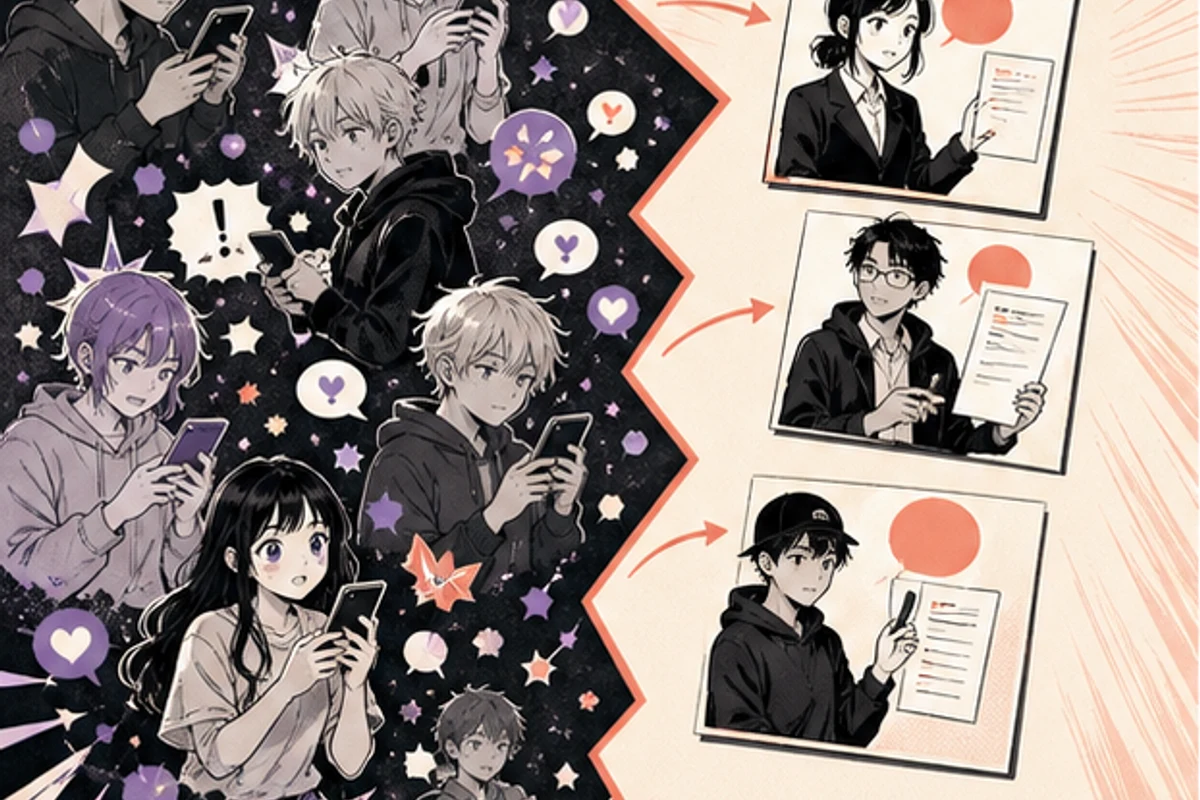
Facebook looked busy and sold very little
The Facebook audit reviewed 591 recent top-level posts. About 34 were visible “for hire” or available-for-commission posts. Only two were clear buyer or collaborator searches. At least in this sample, supply posts outnumbered explicit buyer posts by 17 to 1.
Five known high-volume authors produced 116 of the effective posts, or 19.6 percent of the sample. Reader and news groups added chapter reposts, recommendations, memes, and plot discussions. Those groups may be healthy communities, but their activity does not establish demand for a creator tool.
There were a few valuable workflow questions. One creator described losing their touch with coloring after a long break. Other discussions covered backgrounds, changing artists, handoff, line work, and shading. Those low-frequency posts were more useful for product understanding than hundreds of portfolio shares.
The conclusion was not that Facebook is irrelevant. It is useful as a listening pool and a place to answer specific questions without a promotional link. It is weak evidence for purchase intent when viewed as one large feed.
What creators were not asking for
Counterevidence prevented the research from becoming product marketing.
Many creators' main bottlenecks were scripts, paneling, line art, backgrounds, lettering, discovery, or platform stability. Better coloring would not solve those problems. Behance, ArtStation, and many Facebook posts demonstrated that colorists exist and are available, but a supply of portfolios is not evidence of buyer density.
Reader communities in several languages focused on releases, collecting, recommendations, and story discussion. Their interest in colored art did not imply they were producing pages or shopping for a workflow.
Communities also showed distrust of generative AI, especially when it was connected to unpaid labor, hidden use, copied identity, or unclear rights. Newgrounds, ComicFury, The Duck, ART street, POSTYPE, and Facebook discussions differed in tone, but transparency and creator control repeatedly mattered.
This is why the research does not support “replace a colorist.” It supports testing assistance on repetitive stages while the artist retains the palette, review, correction, and final decision.
Privacy and rights were part of the demand
Some creators explicitly prohibited using their work for AI modification, learning, or training. Others worked under client terms or with unpublished material. A useful workflow must ask who owns the page, what external processing is allowed, how files are stored, and whether the team can delete them.
VividManga's current policy should be read directly rather than summarized as a promise it does not make. The Privacy Policy says uploads, results, and job metadata may be stored for history, support, abuse prevention, and service reliability, and that providers may support storage and AI processing. The Terms of Service require the user to have the necessary rights and warn that AI output may be imperfect or unsuitable.
If a publisher, client, co-creator, platform rule, or NDA does not permit external processing, do not upload that work. Use a public or non-sensitive test page instead.
What this changes for a coloring workflow
The research points to a sequence that can be tested:
- Start with owned or authorized art.
- Keep the original layered file.
- Define the palette and protected elements before processing.
- Test one representative page.
- Review line integrity, flats, continuity, lighting, and reading-size output.
- Record the correction effort.
- Expand only to a small batch if the test earns it.
VividManga currently returns a rendered WebP image, not layered PSD files, editable flats, or masks. The output can be evaluated as a first pass, but production edits still belong in the creator's editor.
Colorize one manga page here
Upload one black-and-white page, get a color result, then decide whether to process more pages.
PNG, JPG, or WebP under 5 MB works best.
Use this result to judge palette, line art, and speech bubbles before scaling.
If the rights and privacy checks pass, try the single-page manga colorizer on one difficult page. Compare it with your established process before opening the multi-page coloring workflow.
How to read the findings without overclaiming
Does the sample represent every manga creator?
No. It is a multilingual, cross-platform operational scan, not a randomized survey. Platforms differ in audience, access, ranking, and posting culture. The findings identify repeated patterns worth testing, not population-wide percentages.
Why include marketplace listings?
They expose scope, budget, timing, and deliverables. Those details make buyer intent easier to distinguish from general interest. Marketplace incentives and fees still create bias, so the examples were treated as transactions or requests, not as neutral surveys.
Why publish negative findings?
Because the absence of a coloring need matters. If a creator's bottleneck is script or discovery, a coloring tool should not pretend to solve it. Counterevidence narrows the audience and keeps product claims tied to actual work.
Are the listed prices current market rates?
No. They are dated snapshots from the audit window. Individual pages, contracts, locations, skills, platform fees, and rights can change the price substantially.
The central finding is modest: manga coloring demand is real when it appears inside a defined production job, but social activity alone is a poor proxy. Look for scope, deadlines, files, revision rules, rights, and payment. Those are the signals that turn a colorful feed into evidence of work someone is actually trying to finish.