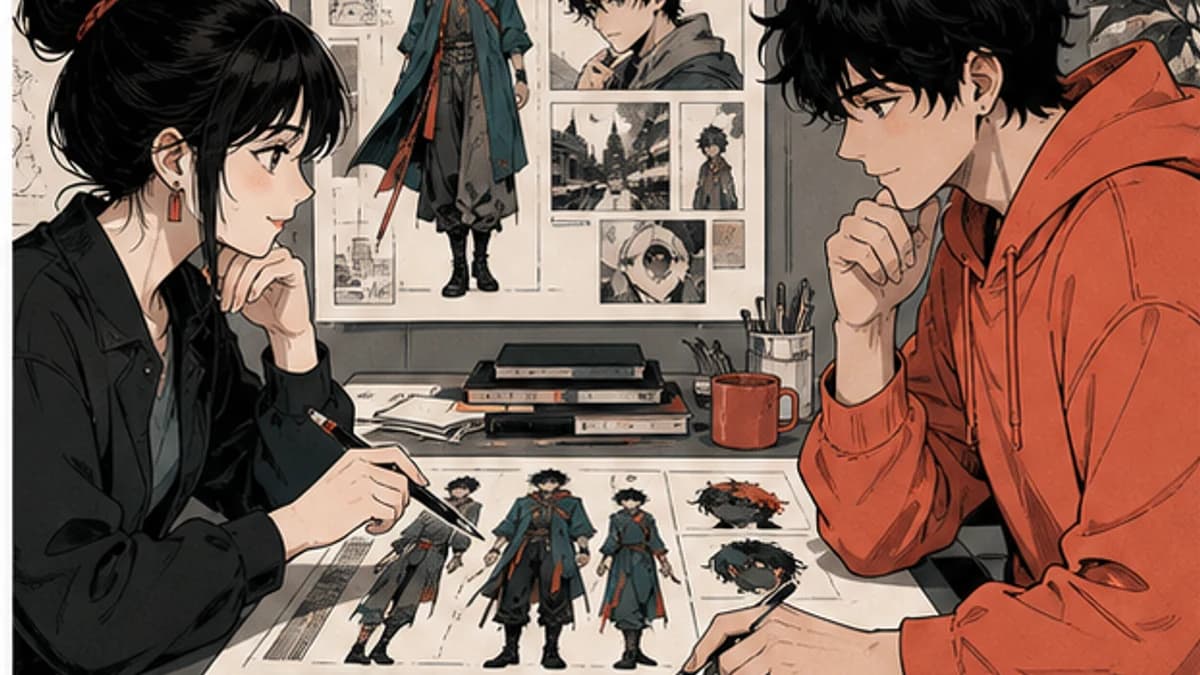
A colorist should not have to reverse-engineer the story from a folder called final_final_2. Yet that is what many handoffs quietly ask them to do. The line art may be clean, but the decisions that control the finished page are scattered across old exports, chat messages, and a few panels that happen to look right.
A useful manga colorist brief is much smaller than a style bible. It identifies what must stay consistent, what the colorist may interpret, how the files should come back, and how both sides will decide that a page is approved. The best time to settle those questions is before a full chapter enters production.
Begin with one page that represents the real job
Do not choose the easiest page as the test. Pick one that includes a recurring character, a difficult lighting condition, a small face, overlapping effects, and at least one speech bubble near the art. If the project contains both quiet dialogue and action, add a second test panel from the other mode.
The test page answers practical questions that a mood board cannot. It reveals whether thin lines survive, whether the supplied palette works under the scene light, whether the requested rendering level fits the schedule, and whether the creator and colorist mean the same thing by “finished.”
Send the original line-art file, a flattened preview, and the intended reading dimensions. If the page will be read mainly on a phone, say so. Review the test at that size, not only while zoomed into the working file.
Give every recurring color a job
A row of unnamed swatches is better than nothing, but names make the palette usable. Label colors by character and material: Noa_hair_flat, Noa_coat_trim, station_wall, or memory_scene_wash. This separates identity colors from scene colors.
Identity colors belong to a character or object. Scene colors describe the light, atmosphere, or narrative treatment around them. The coat can look warmer at sunset without changing its canonical flat. Keeping those decisions separate lets a reviewer hide the lighting and check continuity underneath.
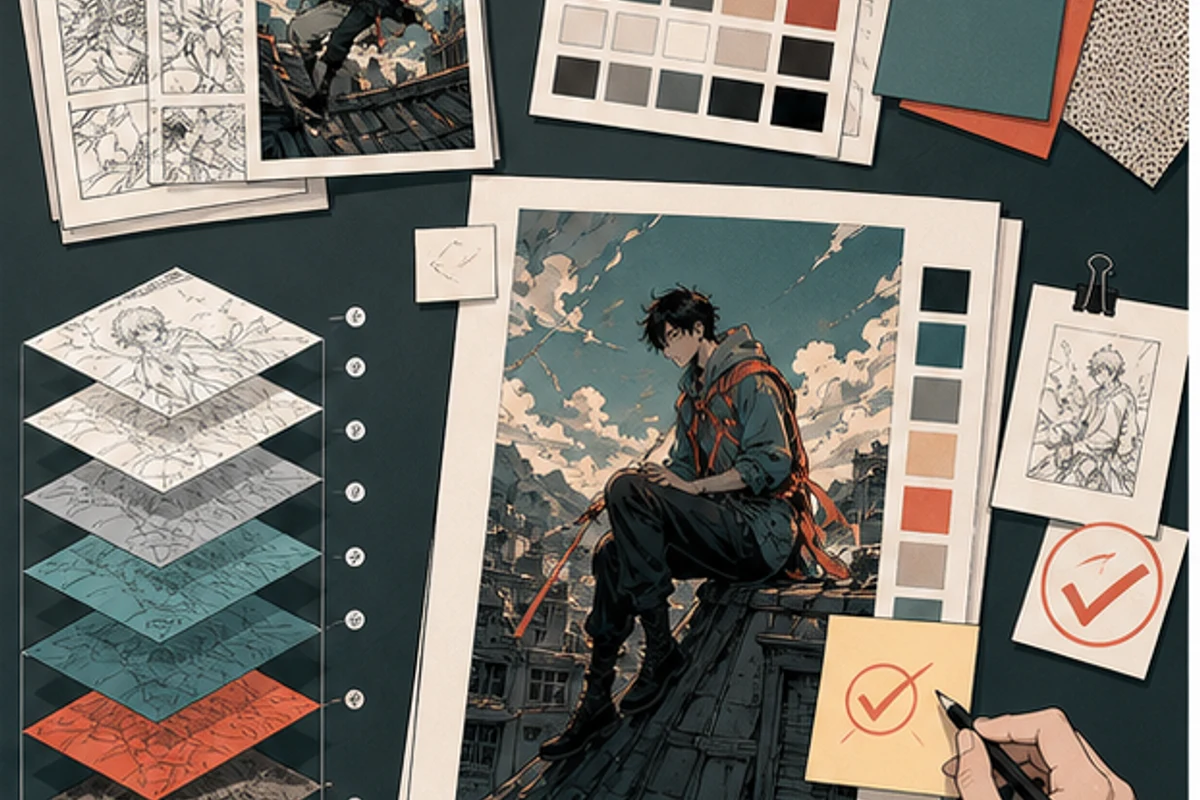
The official CLIP STUDIO PAINT colorization guide demonstrates a layer-based process that places base colors, shadows, light, and adjustments into distinct stages. Adobe's swatch documentation is written for Illustrator, but its distinction between named, reusable swatches and one-off colors is useful in any production setup.
For each recurring character, include:
- the neutral-light flats for skin, hair, eyes, main clothing, trim, and signature props;
- one approved panel that shows the intended rendering level;
- one difficult lighting example, if that condition repeats;
- material notes where they change the rendering, such as matte cloth, polished metal, or translucent plastic;
- any story boundary that changes the design, such as damaged clothing or dyed hair.
State the layer and delivery rules plainly
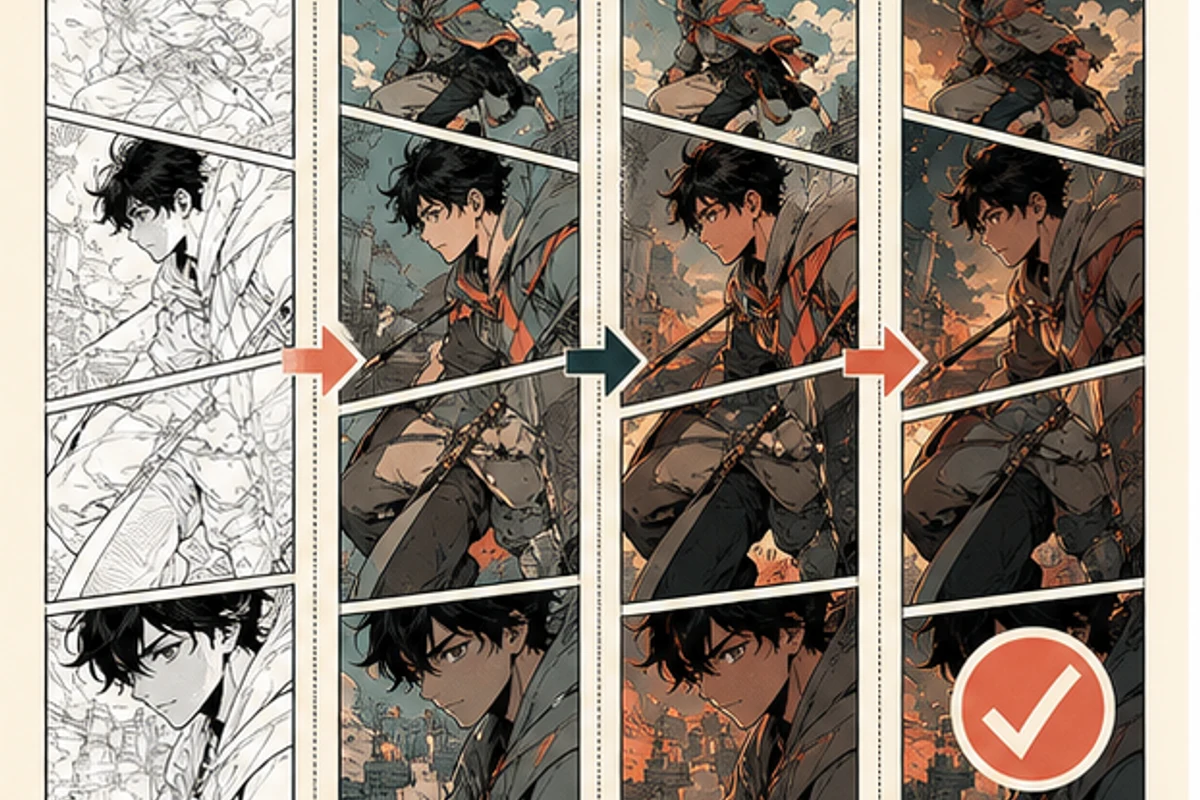
“Please keep it editable” is not a file specification. Name the software and version if it matters, the accepted file formats, the color profile, the canvas size, and the layer groups you expect. If the colorist may use different software, ask for a small compatibility test before production.
A compact layer request might be:
- line art remains untouched at the top;
- flats are separated from shadows and light;
- recurring characters have clearly named groups;
- dialogue, sound effects, and panel borders remain editable or protected;
- adjustment layers are retained rather than baked into every paint layer;
- the delivery includes the layered working file and a flattened review export.
Be honest about what the job requires. Flatting, cel shading, painted rendering, effects, background coloring, and lettering are separate scopes. If you want some but not all of them, write that down. A colorist pricing clean flats should not discover halfway through that the expected finish includes complex atmospheric light and painted backgrounds.
Also define what not to change. Facial line art, screentones, speech bubbles, costume colors, and established effect colors are common protected areas. Three precise “do not change” notes are more useful than a general request to preserve the style.
Turn taste into reviewable decisions
Feedback such as “make it pop” creates another round of interpretation. Feedback tied to a panel, material, and reference can be acted on.
Compare these two notes:
The colors feel flat. Please make it more cinematic.
On page 06, panels 2 and 3, keep the jacket flat from the palette. Push the station light cooler on the shadow group, but leave the face warmer so the expression remains the focus. Match approved page 02.
The second note identifies the location, the fixed decision, the allowed change, and the reference. It also avoids telling the colorist how to rebuild every layer.
Set the review order in the brief. A sensible sequence is line-art integrity, flats and leaks, character continuity, lighting direction, value readability, and effects. When the fundamentals fail, stop there. There is little value in polishing glow effects before correcting a missing eye color.
Define revisions before anyone is tired
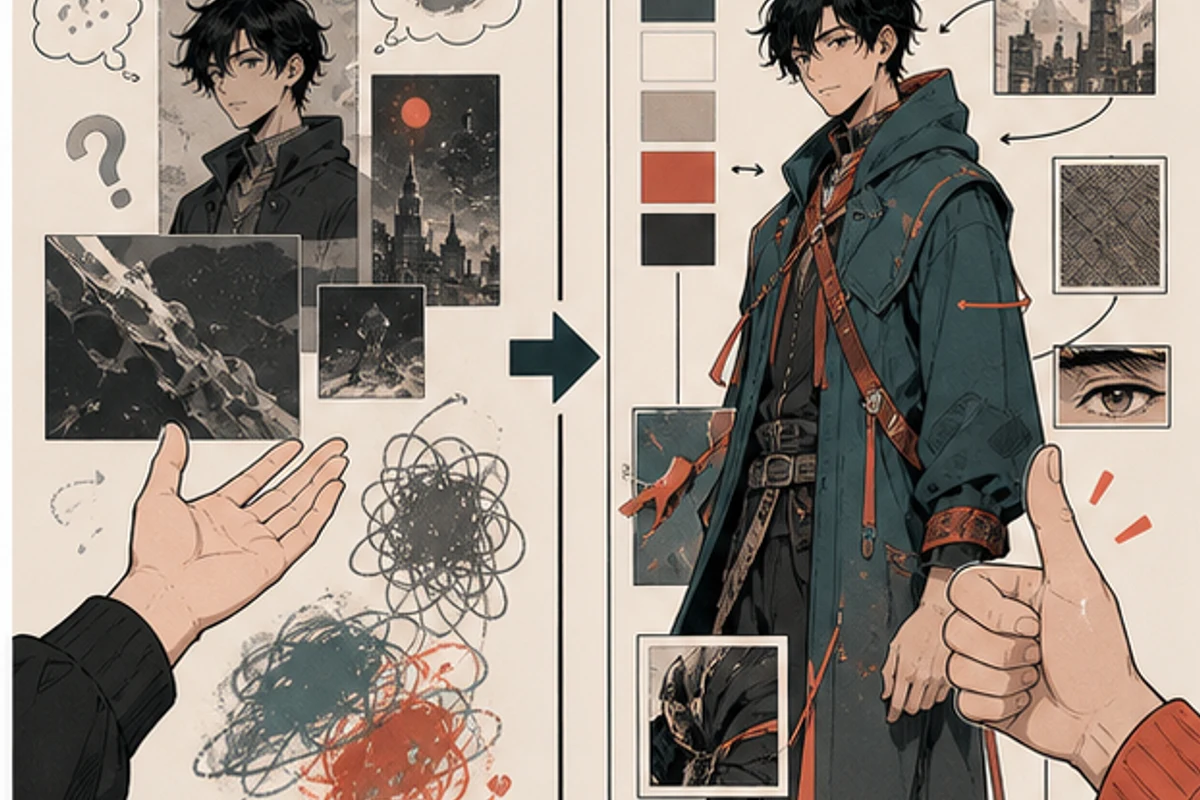
Separate corrections from direction changes. A correction brings the page back to the agreed palette, layer rules, or approved test. A direction change replaces an earlier decision, such as moving a scene from daylight to sunset or changing a costume after pages have been colored.
Your brief should say how many review rounds are included, who consolidates notes, and what counts as a new scope. One person should return a single marked-up list. If a writer, editor, and art director send separate messages, the colorist may receive conflicting instructions and no reliable approval state.
Use page and panel references. Mark each item as blocking or optional. Record approval in the same place as the feedback. A short table with page, panel, issue, reference, owner, and status is enough for most small projects.
Deadlines need the same clarity. Include the test-page date, first batch date, feedback window, revision window, and final delivery date. If late notes move the schedule, say how. A buffer is useful only when review time is protected inside it.
A copyable manga colorist brief
The following is intentionally plain. Delete sections that do not apply.
Project and audience
Title, format, intended platform or print size, reading direction, and a short description of the scene.
Scope
Number of pages or panels. Specify flats, shadows, lighting, effects, backgrounds, lettering, and any excluded work.
Visual target
Link one approved page and one character sheet. Describe the finish in concrete terms: hard-edged cel shadows, restrained saturation, warm key light, or limited texture.
Palette
Attach named character and location swatches. Mark identity colors, scene modifiers, and story-specific variants.
Files and layers
List source format, software constraints, canvas, color profile, required groups, naming rules, and flattened review export.
Protected elements
List line art, bubbles, screentones, panel borders, costume colors, or effects that must not be changed.
Review and revisions
Name the reviewer, feedback format, included rounds, approval order, and the line between correction and changed direction.
Schedule and delivery
Set dates for the test, batches, feedback, revisions, and final files. State how delayed feedback affects delivery.
Rights and confidentiality
Confirm who owns the art, what the colorist may show publicly, whether subcontracting or external processing is permitted, and when working files should be deleted.
If you test an automated first pass
An automated color pass can be evaluated on the representative page, but it does not replace the brief. The brief is what lets a person judge the output.
VividManga currently returns a rendered WebP result, not a layered PSD or a set of editable flat masks. Keep the original layered file and rebuild or correct production layers in your editor. Before uploading unpublished or client work, read the current Privacy Policy and Terms of Service. Upload only material you own or have permission to process, and check any client agreement or NDA first.
Colorize one manga page here
Upload one black-and-white page, get a color result, then decide whether to process more pages.
PNG, JPG, or WebP under 5 MB works best.
Use this result to judge palette, line art, and speech bubbles before scaling.
If external processing is allowed, test the single-page manga colorizer with the difficult page from the brief. Compare the result against the palette and protected-elements list. Only after that review should you consider a small multi-page coloring test.
Questions worth settling in the first message
Do I need a full character bible?
Usually not. Start with the recurring identity colors, one neutral reference, one approved rendered page, and any repeated lighting condition. Expand the sheet when a real continuity decision appears.
Should the colorist receive rough color notes inside the page?
Yes, when the story depends on local information that a palette cannot express. Mark a specific prop, flashback treatment, effect, or off-screen light directly on a duplicate or markup layer. Keep those notes out of the clean line art.
Who should approve the test page?
The person who will consolidate later feedback. If several stakeholders must sign off, settle their disagreements on the test page before the rest of the chapter begins.
Is a reference image permission to copy its style?
No. Use references to communicate traits such as edge hardness, contrast, palette range, or material treatment. Ask for an original solution that fits the project rather than a replica of another artist's work.
A strong brief does not remove artistic judgment. It protects the decisions that should not be remade and leaves the colorist room to solve the page. Send the compact sheet, approve one page that can genuinely fail, and keep every later note tied to the agreement both sides actually saw.