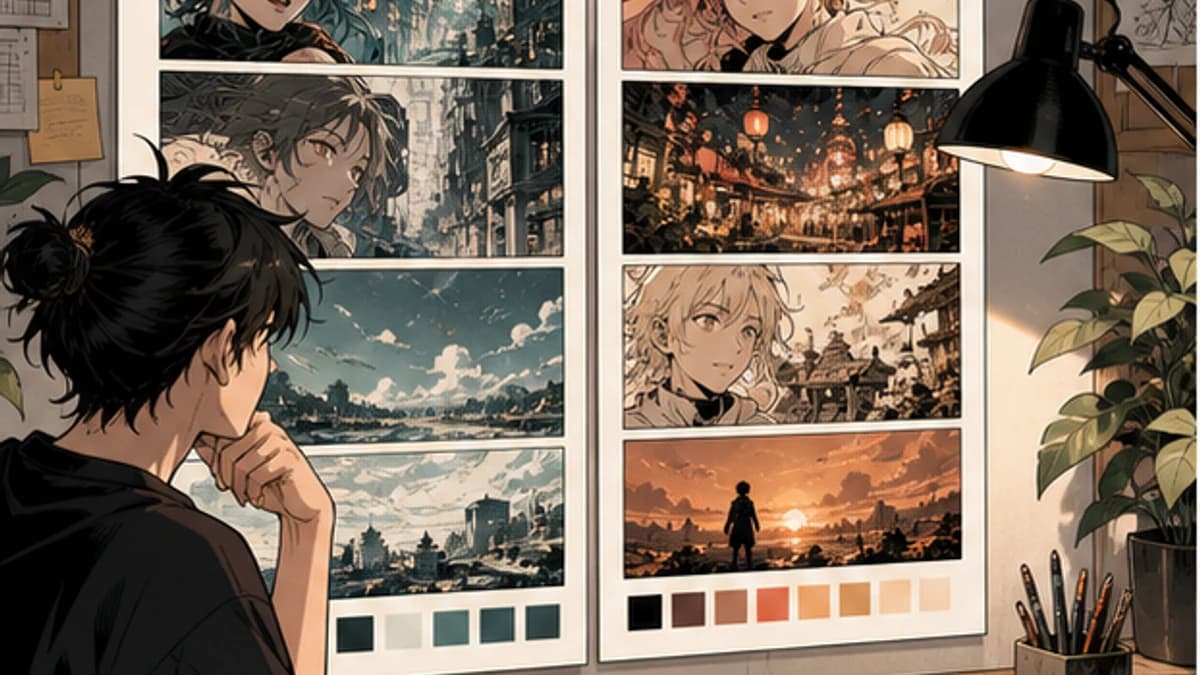
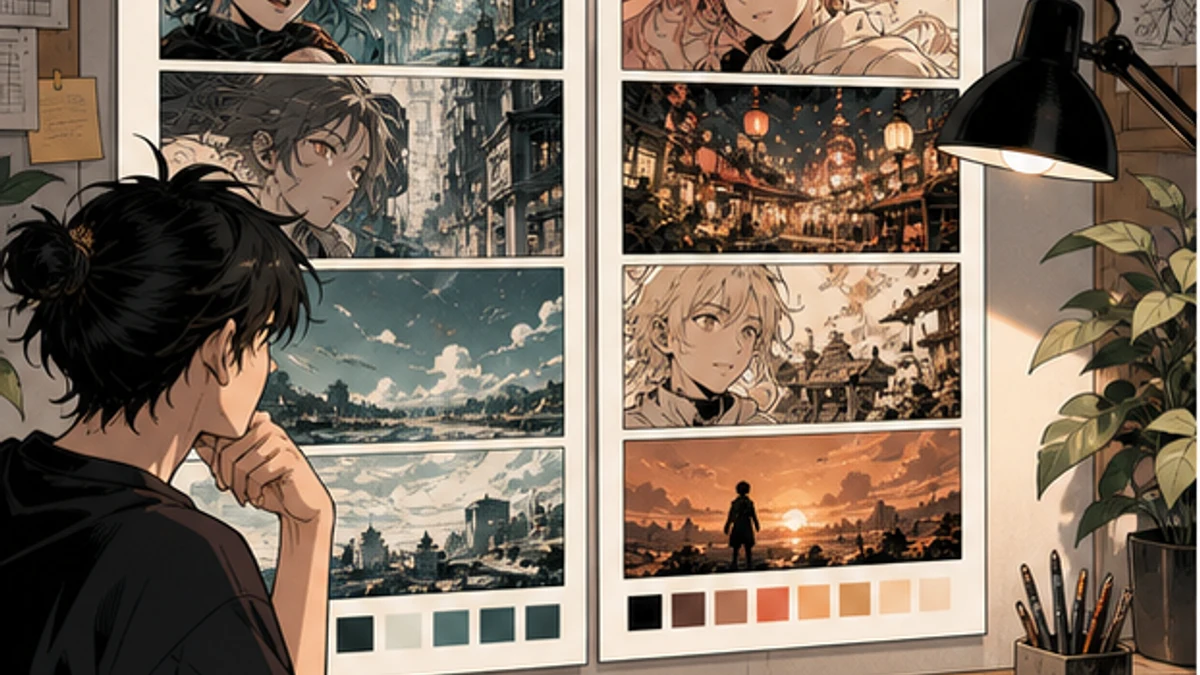
The shortest answer to “How much does manga coloring cost?” is a number. It is also the least useful answer. A page of clean flats, a finished cel-shaded page, and a painted cover can all be sold as manga coloring while requiring very different work.
The better way to price a job is to define the unit, the finish, the condition of the source art, and the review burden. Then a page rate or hourly rate has something concrete behind it.
Treat public rates as snapshots, not a tariff
VividManga's July 31, 2026 community audit found two useful high-intent examples. One Upwork manga project offered $750 for 24 colored comic pages, which works out to $31.25 per page. Another Upwork coloring role listed $25 to $42 per hour for coloring pre-drawn pages in an ongoing engagement. A separate paid Reddit listing sought consistent, print-ready color work around $30 to $35 per page.
Those are observations from specific listings, not a universal market price. They do not tell us the page complexity, the artist's location and experience, the number of characters, or the revision history that led to the final payment. Platform fees and currency conversion can also change what either side receives.
The audit also reviewed Fiverr coloring orders where visible entry packages began at low prices, while reported order values commonly sat in broader bands such as $50 to $100 or $100 to $200. That gap is a warning: a marketplace card may describe the smallest package, not the scope a real chapter needs.
Use public listings to learn how buyers describe work and how sellers divide packages. Do not use one listing to tell a colorist what their labor should cost.
Define what one “page” contains
A page quote becomes comparable only after the page is described. Include the average number of panels and characters, background density, effects, screentones, source-file quality, output size, and intended finish.
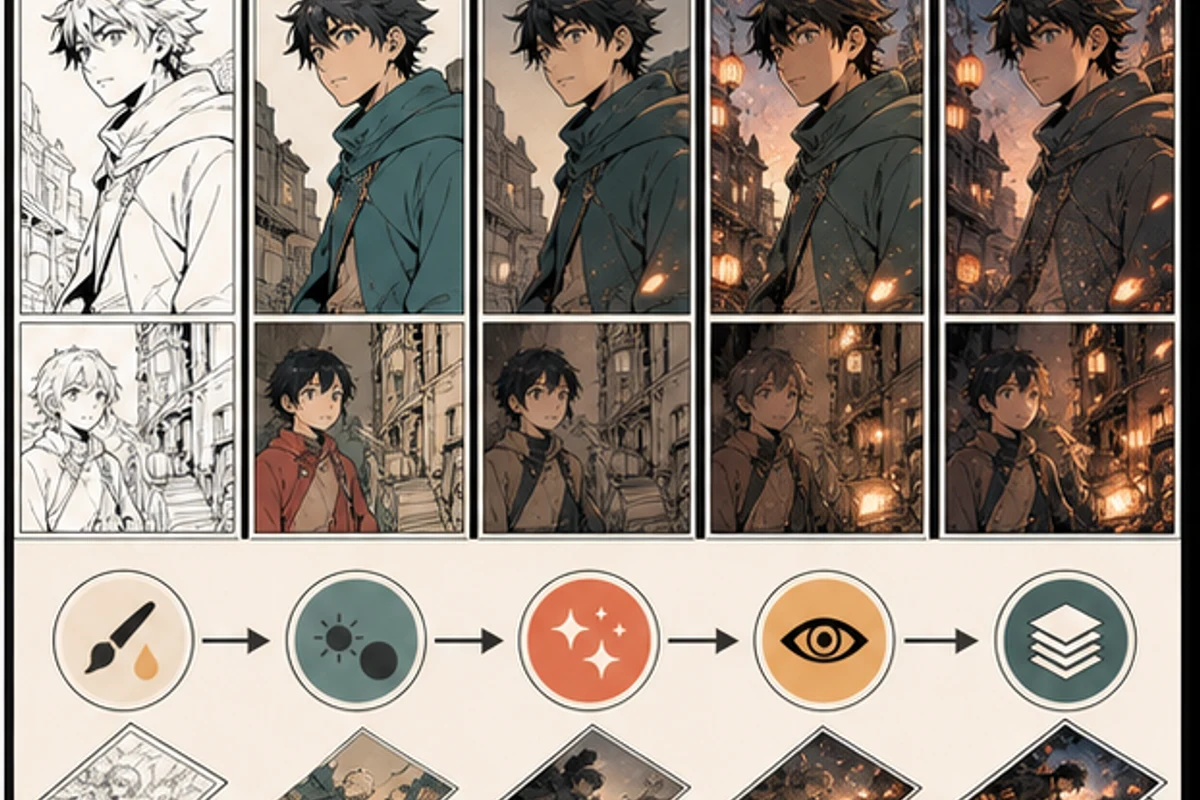
Ask which of these stages are included:
- cleaning or preparing the line art;
- separating flats or selection areas;
- local colors for characters, props, and backgrounds;
- shadows and light;
- atmospheric grading and effects;
- painted rendering or texture;
- lettering or sound-effect treatment;
- print preparation and export;
- layered source-file delivery.
A creator who supplies clean flats is buying a different service from one who supplies only a rough scan. A page with two talking heads is not equivalent to a crowd scene with reflective armor and colored magic. If the chapter mixes easy and difficult pages, provide several representative samples instead of asking for a quote from the page count alone.
Page rate, hourly rate, or a batch quote?
A page rate works well when the source files and finish are consistent. Both sides know what an approved page looks like, and the colorist can estimate the variation across the batch. It gives the creator a predictable chapter budget and rewards an efficient workflow.
Hourly pricing is easier to defend when the scope is uncertain. Cleanup, old files, inconsistent line art, heavy revision work, and exploratory art direction can make one page take several times longer than another. The tradeoff is budget uncertainty, so set an estimate range and a point where the colorist must ask before continuing.
A batch quote can combine both ideas. Price the agreed chapter after a paid test, list the assumptions behind it, and define what would trigger a change order. This is often clearer than pretending every page is identical.
For recurring work, track actual effort by stage during the first batch. Neither side needs surveillance. A simple record of flats, rendering, effects, and revisions reveals whether the next quote should change.
Pay for the test page
A test page is production work. It should be paid unless the artist freely offers another arrangement. A paid test lets the creator evaluate communication, layers, continuity, and revision speed without asking several people to create speculative finished art.
Choose a page that represents the hard part of the project. Send the same brief and source package that the main job will use. Agree on the test price, deadline, deliverables, and rights before work begins. If the test is accepted into the final comic, say so explicitly.
Review the result in this order: line-art integrity, flats, recurring colors, lighting, readability, effects, then file organization. A low quote that fails at the first two stages is not cheaper once the chapter needs repair.

Revisions and deadlines change the real cost
The initial color pass is only part of the job. A quote should state how many review rounds are included, who sends the notes, and what happens when the direction changes.
A correction fixes work that missed the approved palette or brief. A change of direction replaces an earlier decision: new costume colors, a different time of day, a rewritten effect, or a request for a more detailed finish. The brief should say how that extra work is priced.
Rush work can cost more because it displaces other commitments and removes the colorist's production buffer. The creator also needs time to review. A deadline that allocates no review window tends to create either late delivery or silent approval of mistakes.
Rights affect cost and risk as well. Clarify whether the fee covers a license or transfer, whether the colorist may show pages in a portfolio, whether credit is required, and whether layered files are included. Do not assume payment automatically answers every ownership question. Put the agreement in writing and obtain legal advice for high-value or complex rights transfers.
A simple quote-comparison sheet
Put every offer into the same table:
| Field | Quote A | Quote B |
|---|---|---|
| Unit | Per page, hourly, or batch | Per page, hourly, or batch |
| Included stages | Flats, light, effects, export | Flats, light, effects, export |
| Source assumption | Clean ink, named layers | Rough scan, cleanup needed |
| Finish reference | Approved sample page | Approved sample page |
| Included revisions | Number and format | Number and format |
| Layered file | Included or extra | Included or extra |
| Schedule | Test, batch, review, final | Test, batch, review, final |
| Rights and credit | Written terms | Written terms |
| Extra-work rule | Hourly or change order | Hourly or change order |
Do not automatically choose the lowest total. Compare what happens after the first draft. A clearer brief, reliable naming, and a fast correction loop can be worth more than a small difference in page rate.
You can estimate the creator's internal review cost too. If one workflow requires extensive leak cleanup and continuity correction, the creator is paying with their own hours even when the invoice is lower.
Where tools can and cannot reduce the bill
Automation may reduce repetitive first-pass work in some projects, but it does not eliminate art direction, rights checks, cleanup, continuity review, or final rendering. It may also create new correction work. Test before including any assumed savings in the budget.
VividManga currently provides a rendered WebP output, not a layered PSD, editable flats, or production masks. If you evaluate it, keep your source file and treat the result as a visual first pass. Before uploading client or unpublished art, review the current Privacy Policy and Terms of Service, confirm that you own or are authorized to process the work, and check any contract or NDA.
Colorize one manga page here
Upload one black-and-white page, get a color result, then decide whether to process more pages.
PNG, JPG, or WebP under 5 MB works best.
Use this result to judge palette, line art, and speech bubbles before scaling.
The free single-page manga colorizer can be used on one authorized test page. Record the manual correction time and compare it with your normal process. If the result is useful, try only a small multi-page workflow before changing a production quote.
Common pricing questions
Is a per-page rate always better for a comic?
No. It is convenient when pages and expectations are stable. Hourly or batch pricing can be fairer when cleanup, exploration, or complexity varies widely.
Should flats cost less than finished color?
Usually the scope is smaller, but difficulty still depends on line quality, tiny enclosed areas, screentones, and required layer organization. Compare the defined task, not the label alone.
Can I ask for a free sample before hiring?
You can ask whether the artist offers one, but a custom test page is labor. A paid test is clearer and gives both sides a small, real engagement with agreed rights and deliverables.
How much contingency belongs in the budget?
Keep room for direction changes, difficult pages, extra review, and file fixes. There is no single correct percentage. Base it on the uncertainty left after the test page and written brief.
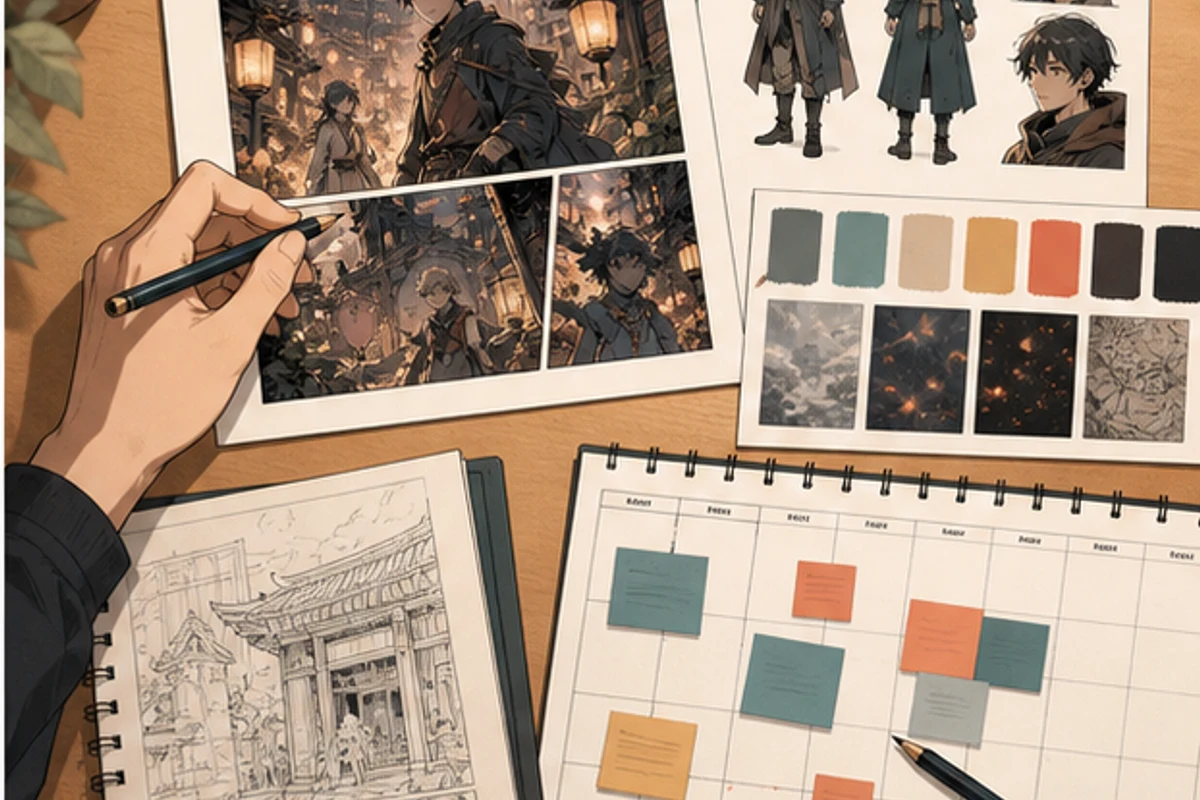
The most reliable estimate starts with one paid representative page. Define the finish, inspect the delivered file, count the correction work, and then quote the chapter. That produces a number grounded in the actual comic, not in a marketplace thumbnail.
Keep the estimate dated. Recheck availability, platform terms, fees, and exchange rates when the project is ready to hire. A six-month production plan should not rely on a listing that may have closed or on a package whose deliverables have changed.
Ask the colorist what information would make the quote more accurate. Clean sample files, a page-complexity breakdown, a finished target, and one consolidated reviewer often reduce uncertainty more effectively than negotiating the number before the work is defined. Record the final assumptions beside the accepted quote so a later chapter can be priced from evidence instead of memory.